Almost every agency we know is getting at least four calls a week from someone looking to purchase them. Sometimes, these interested parties will throw out huge numbers as offers, without knowing a single thing about your agency. The only thing many agency owners have to relate to these offers are announced deal multiples, and the rumor mill about other agencies in their town. How do you know what to apply to your agency if a buyer piques your interest?
Two agencies that operate in the same town can have vastly different valuations as well as can command very different offers from the same interested buyers. When we do a valuation, the report we put together highlights the strengths and areas of opportunity in an agency. This helps an agency negotiate when they’re speaking to their true buyer based on the buyers interests, which helps to make up your actual sale price. During Due Diligence, the price gets set when a specific buyer puts your agency’s metrics (financials, book of business, risk factors, ect) next to theirs and works out how your agency compliments theirs.
A valuation is not a sale price
Both of the valuation reports we produce, a fair market valuation and a book of business report, start from the same place. They price your agency for a generic buyer on the open market. It's useful, because it tells you how your agency stacks up against the market in general.
What it can’t tell you is what one particular buyer will pay. Why? We don’t know the specific interests of that buyer.
“Many times, people will say, ‘What about the things I see in the headlines? Is this really the price of my agency?’” The short answer is no.
The headline number reflects one buyer, one seller, and whatever that pairing made possible. What the headline doesn’t tell us is the buyer’s expense structure, carrier synergies, employee structure, etc. The negotiation and synergies between the buyer and seller does not get announced.
How a buyer actually sets an insurance agency sale price
“The price of an agency, regardless of how it’s valued, is actually determined when you know the buyer and the seller, and you can quantify the synergies between that buyer and seller.” Carey Wallace, AgencyFocus
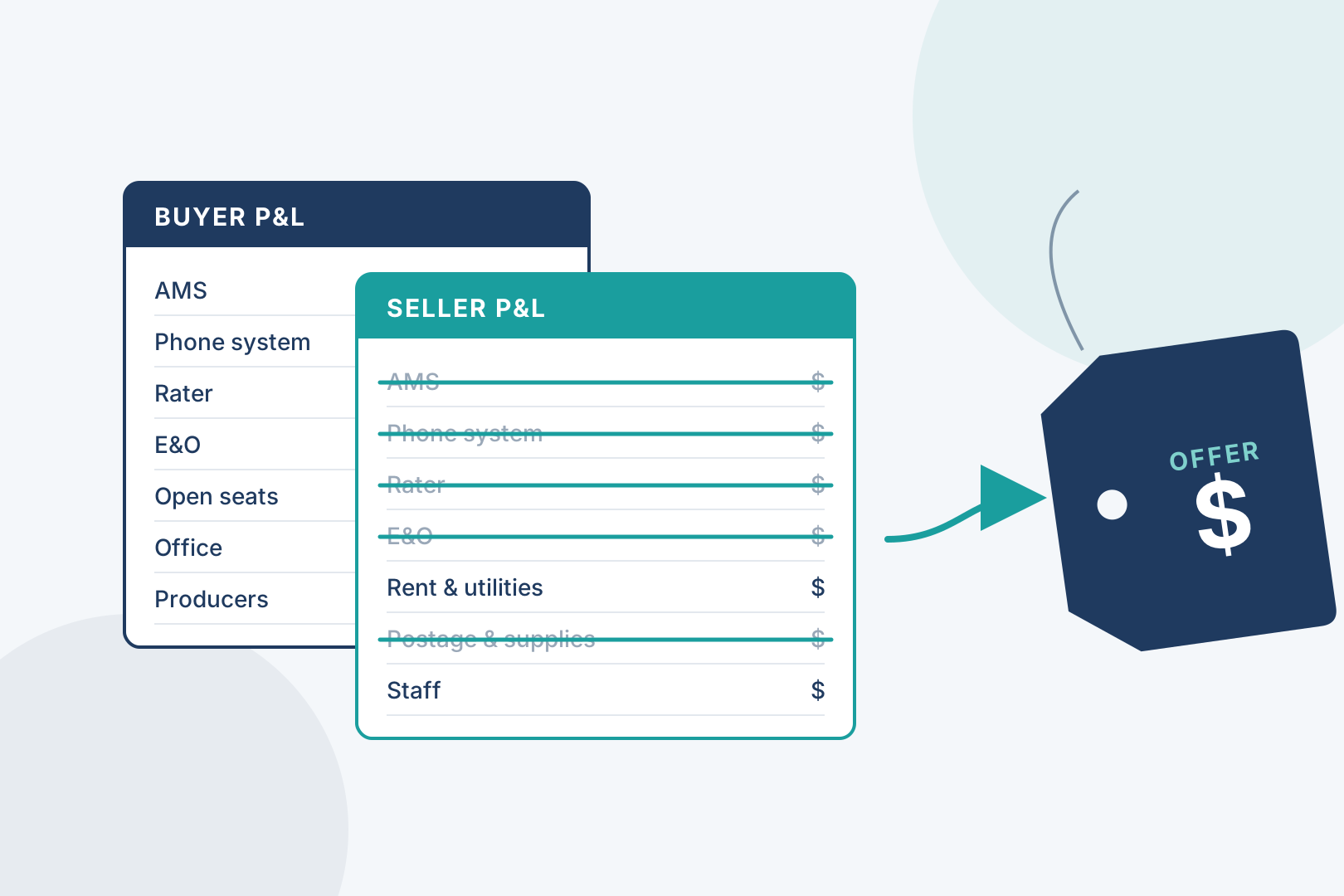
For many of our Fractional CFO clients, we help in this process. We take the buyer’s P&L, put it side by side with the sellers, and go through it line by line.
Technology is typically a good place to start. The seller is paying for an AMS, a phone system, maybe a rater, and the buyer already has all three. So, at the buyers table, the questions can get specific. For the AMS, questions can look like will there be extra seats that we can eliminate? How many employees are coming with the book? What will the new cost be, once these decisions are made?
Then the rest of the list:
- E&O, which gets absorbed into the buyer’s coverage
- The building, and whether you’ll run two locations or one
- Vehicles, and whether the agency will need to continue the payment
- Rent, utilities, postage, office supplies
Once you know which expenses continue, you know the expected profitability of what’s being bought. Then you can set a price and see whether it will cash flow.
One more thing to know as a seller: the offer won’t always pass along 100% of those savings. A buyer wants some room for upside and typically will take some. That's why it's important to have your financials as dialed in as possible going into a couple of years before you're looking to sell.
Why the same agency is worth more to one buyer than another
Let’s use an example, Agency A, and Agency B, both are around the same amount in revenue, have the same number of staff and are both commercial lines focused.
- Agency A is in a different state, is missing three of the seller’s top five carriers, and the book that they have written takes more service capacity, so they’re at top capacity with the current team they have.
- Agency B is located right down the road from the buyer, they have all of the top 10 same carriers and are even in the same network. Their book does not take too much service capacity, and they have utilized virtual assistants in order to outsource part of their servicing. Their team has well documented SOPs in order to get a new virtual assistant or team mate up to speed quickly if needed.
With Agency A, there is a ton more risk involved in purchasing this agency, so the offer is not going to be as competitive as it would for Agency B. Similar agencies two very different offers. As Carey puts it, “Not every book of business is right for every buyer, and not every buyer is right for every agency.”
If you’re selling, your best price comes from the buyer with the most overlap. If you’re buying, you need to know your synergies before you bid. Otherwise you’ll either overpay or lose to the agency across the street.
Clean up now, or the buyer keeps the upside
There’s a line we repeat to every owner we work with: run your agency like you’re going to sell it tomorrow.
If you’re carrying expenses a buyer would cut, or running things a buyer would have to fix, those get discounted from your price. Then the new owner makes the hard decisions after closing and keeps the upside. Make those changes yourself, and you get the more competitive offer.
What to do about it in the next 30 days
- Mark up your own P&L the way a buyer would. Go through last year’s expenses line by line and tag each one: continues under a buyer, or goes away. Cover the AMS, phones, rater, E&O, rent, utilities, vehicles, postage, and supplies.
- Make one hard change you’ve been putting off. For example, consider your employee compensation structure or goal structure, are there SOP's documented, are you paying for any subscriptions that your staff no longer uses. If a buyer would cut it or change something about it on day one, ask yourself why you’re still paying for it
- Get a baseline valuation and treat it as a baseline. It tells you where you stand against the market. Your price comes when negotiating with a buyer at the table.
The agency in that headline had a buyer with synergies you’ll never see. Your number will come from your buyer and the overlap between you two. If you’re weighing a sale or an acquisition and want to understnad where. you stand, talk to us about getting a Fair Market Valuation of your agency so you can show up informed.